
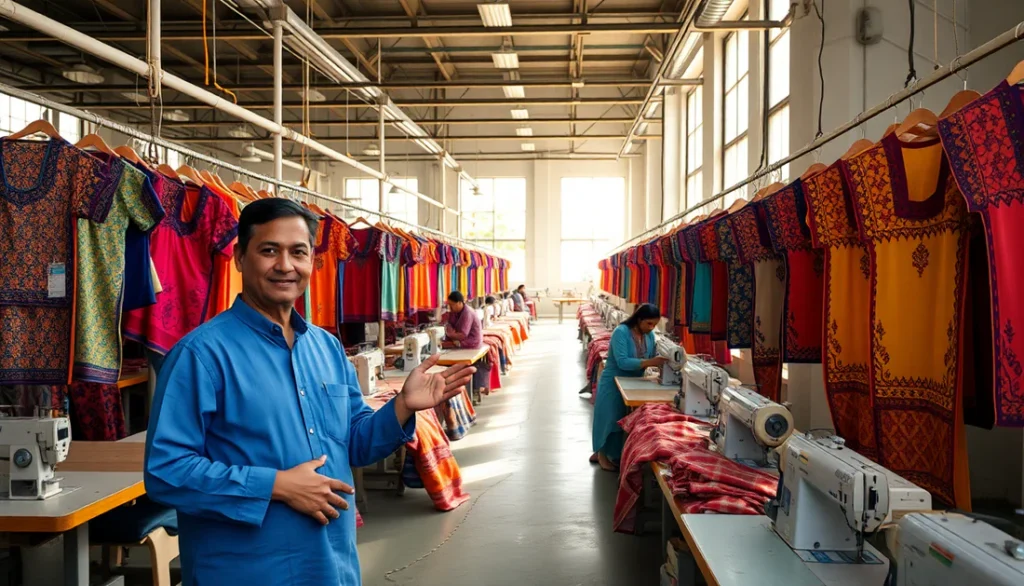
The Indian Kurti industry has altered a lot in the last ten years. Demand from both home and abroad has gone up. This article of clothing is comfortable, has cultural significance, and can be worn in numerous ways, thus women all over India require it. People desire Kurtis that can be worn for a lot of different things, such business, everyday life, and holiday celebrations. Because there is so much demand, producers have to come up with new ideas all the time for how to make things, what fabrics to use, and how to design them. In Jaipur markets, Indian producers make goods for both local and foreign kurti makers. On the one hand, wholesale producers make a lot of products for major stores and exporters. Most Ladies Kurti Manufacturers only offer basic collections, so companies may not be able to get unique designs unless they pay more for them. Even yet, wholesale production is still an excellent and profitable option for fashion businesses that are just starting out or growing to go. Indian makers have had to make their kurtis satisfy global standards for sustainability while yet preserving the artistic and cultural ethos of the clothing.
The first thing to do on the journey is to choose out fibres that can be used again, break down on their own, and aren’t excessively processed.
Even with these issues, Indian producers are making a lot of effort towards responsible fashion, which is great to see. All of these things together make India look even better as a world leader in creating kurtis that are good for the environment and fair.
People are striving towards fashion that is aware
This transformation in culture is helping people who manufacture sustainable kurtis reach more people, both in their home nations and around the world. The movement is gaining stronger as more individuals wear second-hand garments, upcycle their old clothes, and recycle them. People are getting devoted to sustainable kurtis that are made with care and skill as they learn to appreciate quality over quantity.
As kurti trends change in Jaipur, business owners and boutique owners in India and throughout the world seek to work with trustworthy kurti makers to bring their brand ideas to life. There is a lot of information on this site concerning the differences between wholesale and retail kurti producers in Jaipur. It also shows you how to choose the right partner for a successful kurti business in 2025 and beyond.
The kurti business is growing in India
Surat, Jaipur, Ahmedabad, and Lucknow are now key places where millions of kurtis are made every year for brands all over the world. There are many different sorts of clothes in this field, ranging from cheap, casual clothes to expensive designer clothes. This gives firms a lot of chances to find their niche in the market. Choosing the appropriate manufacturer is the most crucial thing for a business, whether it wants to sell small groups of products or export a lot of them. The appropriate manufacturer will bring you your items quickly, make sure they are of top quality, and save you money.
Another problem is keeping track of your stuff. You have to pay for everything at once and have enough room to store it when you buy in bulk. Retail manufacturing might be beneficial for companies who want to be creative and stand out. Retail manufacture, also known as private label or bespoke manufacturing, is the best option for firms that want to stand out and be distinctive. In this strategy, manufacturers make little volumes or custom designs based on what the consumer wants. These kurtis are hard to find at other stores, which makes brands stand out in the market.
They usually have minimum order quantities (MOQs) that can be modified. This lets firms try out new ideas without having to pay a lot of money up front. The main challenge with manufacturing goods for stores is that each item costs more. Economies of scale don’t work since the output is limited and made to order. If this happens, prices at stores might go up, which isn’t good for markets that care about prices. Make sure the maker can deal with a range of designs and materials. You should be able to buy them in bulk or at a store, and they should work with cotton, rayon, silk, linen, and georgette. India offers a large network of trained craftsmen and the latest textile technology. This means that starting in 2025, every business, big or small, can make something really unique in the world of kurtis.
The Jaipur kurti manufacturers are one of the fastest-growing parts of the women’s clothing market. More and more individuals want clothes that are both ethnic and Indo-Western. Brands may better tailor their sourcing approach to their target market and financial goals by studying how these two models are different. Most retail manufacturers work in small groups and use both machinery and hand tools to make things more accurate and beautiful. People who sell to businesses want things to work well and stay the same. People who sell to consumers want things to be flexible and come up with fresh ideas. Another big difference is how prices are set. When you buy products in bulk, the cost per unit is low because you get a lot of them at once. However, you normally need to acquire a greater minimum order quantity (MOQ).
But there are some downsides, such less exclusivity, designs that are the same for everyone, and lengthier lead times because there are so many of them. Brands can keep creative control over their collections if they work with a retail manufacturer. Their major purpose is to help brands stand out more by employing better design, interesting fabric combinations, and clothing that fits well. You can’t just look at prices and styles to choose the proper Kurti maker.
Summary
Kurti producers in Jaipur are now more focused in being eco-friendly. By making smart choices about where to get their materials now, manufacturers may set themselves up for long-term success in India’s burgeoning Kurti industry in 2026 and beyond. The fashion industry is doing very well, therefore more designers, entrepreneurs, and apparel brands are entering the Kurti sector to suit the growing demand both at home and abroad. There are two ways to make garments in India: in large quantities and in tiny amounts. You need to know what makes them different so you can pick the perfect collaboration for your brand’s goals. This blog post goes over the main distinctions between wholesale and retail Kurti makers in India, the pros and downsides of each, and how to pick the ideal one for a growing fashion business.