
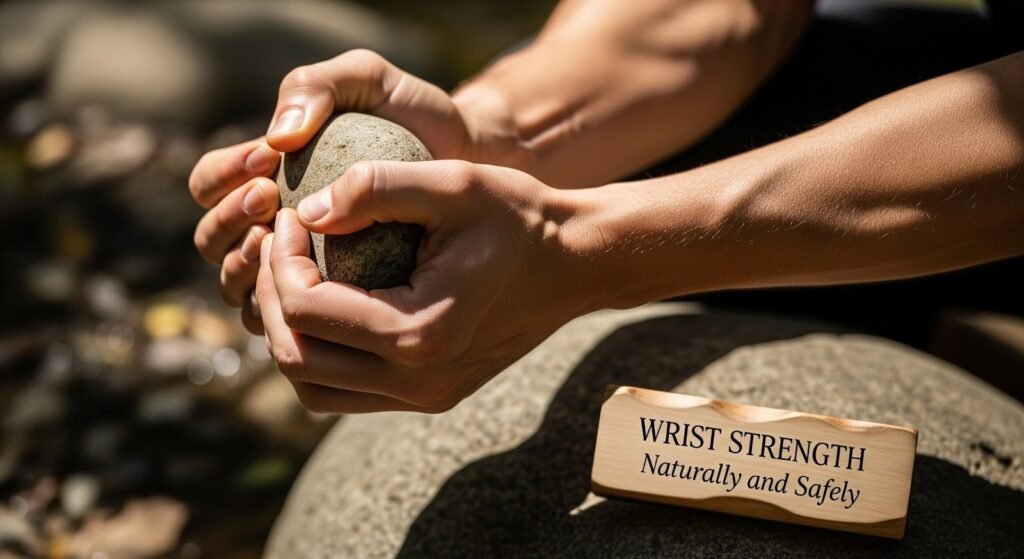
Fingers and wrists are more important than you might think at first. Developing finger and wrist strength can take your performance to new heights, enhance your sport or activity performance, help you avoid injuries, and make your life easier and more efficient. The wrist holds your pressing power, and your fingers hold your grip. If either of them is weak, you are already at a disadvantage.
This blog is going to help you build finger and wrist strength in a balanced way without overtraining, which might strain your tendons, wrists, or elbows.
Why Finger and Wrist Strength Matter
Strong fingers and wrists improve:
– Stronger grip power
– Better control in lifting exercises
– More stable joints
– More precise performance in your sport or activity
– More resistant to injuries
Fingers and wrists are two of the most underappreciated yet crucial parts of the body. Developing finger and wrist strength can help you perform better in your sport or activity, as well as safeguard your other joints from injuries.
Principle 1: Start with Controlled Resistance
You should not start with heavy weights. Tendons take a long time to adjust.
Safe starting options:
– Dumbbell wrist curls
– Resistance bands for finger extensions
– Bodyweight dead hangs
– Soft grip squeezes
Principle 2: Train Flexion & Extension Together
Most activities require some grip or hand flexion. If you only train the flexors and ignore the extensors, you’ll end up creating a muscular imbalance.
Exercises to include:
– Wrist curls (Flexion)
– Reverse wrist curls (Extension)
– Finger band openings
– Light plate holds
Balanced flexion and extension reduce elbow pain and improve joint stability.
Principle 3: Use Isometric Holds
Isometrics are a great choice as they are easy on connective tissue, require little equipment, and are highly effective.
Examples:
– Dead hangs
– Farmer carries
– Plate pinches
– Isometric barbell holds
Isometric work helps to improve grip and wrist stability without putting additional strain on the joints.
Principle 4: Increase Wrist Mobility
Strength is not all about power; flexibility is equally important. If your wrists are tight, it limits your ability to use grip strength to generate force in a push or pull.
Movements to enhance mobility:
– Wrist circles
– Palm to floor stretches
– Reverse prayer stretches
– Wrist flexion/extension stretches
Principle 5: Progress Gradually
Safe progression methods:
– Increase hold time by 5–10 seconds
– Add small weight increments
– Increase carry distance
– Increase training density
The training program requires controlled progression since rapid load increases. The body experiences tendon overload when training progress is made too quickly.
Effective Exercises for Finger and Wrist Strength
| Exercise | Primary Target | Benefit |
| Wrist Curls | Wrist flexors | Improves pressing stability |
| Reverse Wrist Curls | Wrist extensors | Prevents imbalance |
| Dead Hangs | Finger flexors & support grip | Builds endurance safely |
| Farmer Carries | Full grip & wrist | Functional strength |
| Plate Pinches | Pinch grip | Thumb and finger power |
| Finger Band Extensions | Finger extensors | Joint balance |
These exercises require minimal equipment and can be performed at home or in the gym.
Weekly Training Structure
The idea is to train your hands 2 or 3 times a week for about 10-20 minutes per session, working on about 2-4 exercises at a moderate level. A template you can use:
– Wrist curls: 3 sets of 12
– Reverse wrist curls: 3 sets of 12
– Dead hangs: 3 sets of 20-30 seconds
– Finger extensions: 2 sets of 15
Avoid These Common Mistakes
- Do not train your hands daily. They need a break too!
- Do not ignore the aches your body is telling you.
- Do not use maximum weights in your lifts!
- Do not neglect your extensor muscles!
- Do not have your wrists in a bad position!
- Wrist aches do not necessarily mean your hands are weak.
Protecting Your Wrists when Using Other Equipment
Strong wrists are supported by good technique in compound lifts. Maintain:
– Proper wrist position in presses
– Proper grip positioning in presses
– Proper grip in lifts
– Proper warm-up before lifting or training
– Do not have your wrists bent too far back in push-ups or bench presses
Recovery and Maintenance
There are many ways to recover from your workouts. The following are some of the ways you can recover:
– Stretches
– Massage
– Proper nutrition
– If you have a lot of pain, take it easy for a few days
Signs of Progress
– You can hang for a long time!
– You can carry heavy loads!
– The aching in your wrists lessens!
– You can lift steadily!
– The joint aches less!
FAQs
How long does it take to increase wrist strength?
Most people notice improvement within four to six weeks of consistent training.
Can finger strength improve without weights?
Yes. Bodyweight hangs and bodyweight carries and resistance bands create effective training methods.
Is wrist pain normal during training?
Mild muscle fatigue is a typical experience. The body does not experience sharp joint pain.
Should beginners use wrist wraps?
Wrist wraps protect the wrists during heavy lifting. The body loses its natural ability to adapt through excessive wrist wrap usage.
Can older adults safely train wrist strength?
Yes, with light resistance and gradual progression.
Conclusion
The safe natural method for increasing finger and wrist strength needs controlled resistance, balanced training, gradual progression, and recovery methods. The body suffers setbacks when people start to lift weights at excessive levels while they disregard proper joint alignment.
An organized system that utilizes isometric holds together with moderate resistance exercises and mobility drills creates strength development through safe methods. Stronger fingers and wrists lead to better lifting results and enhanced daily activities and healthier joints over time.
To develop strong hand and wrist muscles, you should practice regularly, make gradual improvements, and focus on maintaining balance. Using the best hand grip strengthener that matches your resistance level can also help you train more effectively and safely.