
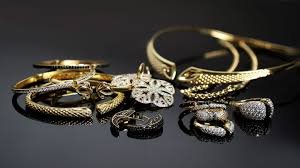
One-of-a-kind jewellery designs generally sell for greater money since they are considered more precious and special. It creates a higher margin for companies than standardised items because of the enhanced perceived value.
They also contribute to the optimisation of the use of materials and the manufacturing process, this reduces waste and improves cost efficiency.
These efficiencies, coupled with the opportunity to command premium pricing, may go a long way towards improving total Custom Jewelry Manufacturers profitability.
Higher Customer Loyalty
Customer loyalty is critical to the long term success of any firm. Loyal consumers bring repeat sales, recommendations and good brand reputation.
Customers relate emotionally to personalised jewellery because they see the items as special and important. This emotional value promotes satisfaction and strengthens recurrent purchases.
Improved Inventory Control
The jewellery sector often faces the problem of inventory management. Too much stock locks up funds. Too little stock means wasted sales chances.
Custom manufacturing helps companies to use more flexible inventory methods. Products may be made to order, according to projections of demand, and thus, there is no need to invest in enormous stocks.
This technique enhances cash flow management and reduces the risks associated with unsold inventories. Manufacturers are also looking into new materials and manufacturing processes that boost efficiency and decrease environmental effect.
Indeed, specialised manufacturing will put businesses in good stead to capitalise on these new prospects.
With the rise in customer desire for personalised items, bespoke jewellery manufacture will be a key strategy for firms seeking innovation and success. The jewellery business is one of the most competitive and dynamic industries in the world market. Every year new brands are created and existing firms continue to come out with new collections to attract the consumer’s attention.
The Challenge of Competition in the Modern Jewellery Market
Today the jewellery industry is overloaded with items from cheap fashion jewellery to expensive luxury jewellery. Consumers are given an unprecedented amount of choices via internet platforms, social media, retail locations and global markets.
The multiplicity of choices presents substantial hurdles for jewellery businesses. When you just compete on price, it’s usually lower profit margins and less room for growth. This enables companies to produce one-of-a-kind, on-trend items that are yet authentic to who they are.
Custom manufacturing adds to competitive advantage for one of the most important reasons, the capacity to translate ideas into reality.
Displaying Limited Editions
Custom jewellery producers use sophisticated computer assisted design technologies to create detailed three dimensional models of jewellery items. Digital representations like this enable companies to see items before the manufacturing process starts. Good design of personalised jewellery is a balancing act between beauty and utility. A item should seem lovely, yet be able to resist ordinary wear and tear and keep its quality over time. “Every step from the initial concept to the final step in production is critical to achieving outstanding results.”
This all-encompassing book discusses the core tenets, tactics and factors involved in developing high-end personalised jewellery that fulfils the needs of today’s consumers and makes a splash in a competitive industry.
Why Custom Jewellery Design Matters
Custom jewellery design is not only about making beautiful things to wear. It’s the transformation of ideas, tales, emotions and inspirations into wearable pieces of art.
Regular jewellery designs are designed for the masses, while bespoke jewellery is created for a particular person or target market. This personalises each item to a higher degree of importance and worth.
A well-stated goal helps us to guarantee that the product will satisfy practical needs and customers’ expectations. High quality jewellery is characterised by durability. “Customers want their jewellery to remain beautiful and practical for years.
Structural integrity has to be considered by designers from the earliest phases of development. Parts need to be designed for the normal wear and tear without affecting the look.
Special care must be paid to the connection points, gemstone settings, clasps and ornamental parts, to guarantee their dependability.
Designing for durability means designing to make goods that will endure and provide customers real value and confidence.
How to Be Inspired for Unique Designs
Every successful piece of personalised jewellery has a solid idea at its heart. It gives guidance, consistency and purpose throughout the whole design process.
This idea should be the guiding principle for the overall style, topic, symbolism and visual identity of the jewellery. The idea is influenced by elegance, simplicity, nature or modern fashion. The idea makes sure that all the design aspects function together in harmony. Material selection is one of the most essential factors in personalised jewellery creation. The materials selected have a direct impact on appearance, durability, maintenance and value.
The specific qualities of precious metals, jewels and speciality materials effect the entire design. Digital technology has revolutionised contemporary jewellery creation. Today, designers are able to construct very accurate three-dimensional models of unprecedented precision using advanced technologies.
Computer assisted design technology lets us see all aspects of a work before we start producing it. “Designers can evaluate proportions, test variations and make adjustments quickly and efficiently.
Digital models promote communication between designers, producers and customers by offering accurate representations of the final product.
Technology provides more innovation and reduces manufacturing risks and development durations.
Writing Precise Technical Specifications
A good jewellery design would include clear technical requirements for production and quality control to be successful.
Specifications might include dimensions, gemstone sizes, setting styles, metal kinds, surface treatments, tolerances and assembly requirements.
These specifics allow for consistent and precise production of the design. They also cut down on the chance of manufacturing mistakes and miscommunications.
Good documentation means easier workflows and better quality results across the whole production process.
Conclusion
Partnering with a Custom Jewelry Manufacturers may provide a multitude of advantages for companies wishing to develop their brand, increase the quality of their products and grow over the long term. Custom manufacturing has a number of benefits that are more important in a competitive market such as offering unique designs, improving customer loyalty, innovation and scalability.
Working with skilled manufacturing partners provides companies with access to specialised skills, modern technologies and flexible production capacities that enable development and distinction.