
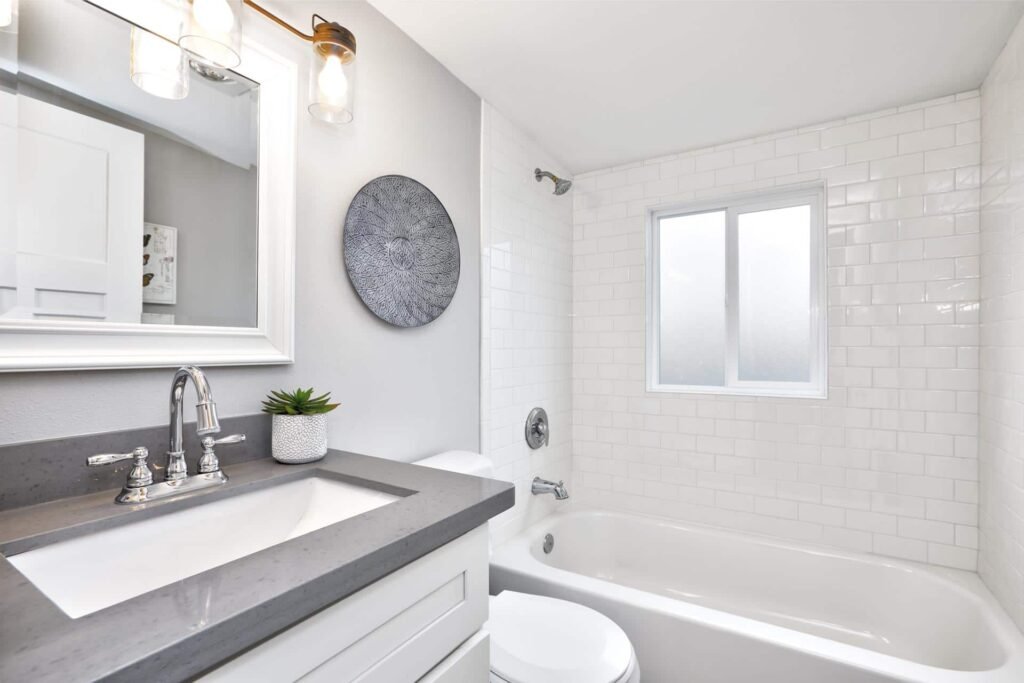
Restoring the look and function of tiles that have become worn, chipped or outdated, without going for a full retile, is what bathroom tile resurfacing basically means. Instead of removing old tiles completely and putting in new ones, what happens in resurfacing is cleaning, repairing and then a strong coating gets applied that bonds well onto the existing surface. Because of this method, tiles end up looking fresh and almost new, and along with that, quite a lot of money, time and mess get saved when this is compared to traditional renovation work.
As time passes, bathroom tiles keep dealing with moisture, soap scum, changes in temperature and the wear that comes from daily use. Due to this, things like cracked grout, colour that has faded, edges that are chipped and an overall tired look start becoming visible. It is assumed by many homeowners that full retiling remains the only fix available, though in most situations, that assumption is not correct. What resurfacing offers is a practical middle path, something that sits between not doing anything at all and jumping into a major renovation.
Table of Contents
What Does the Resurfacing Process Involve?
Deep cleaning is usually where the process starts, so that soap residue, mould and grime built up over years can be removed in a proper way. Cracks, chips or grout lines that are damaged, these get repaired first, since for the finish to last long, having a base that is smooth and stable matters quite a bit.
Once repair work gets completed, light sanding or etching is done on the surface, and this helps the new coating stick properly. After that, a bonding primer which is specially made, gets applied, and following it, one or more coats of a finish that is strong and waterproof. In the end, what comes out is a surface that looks smooth like tile and also resists staining, moisture and the everyday wear that bathrooms go through.
Why Do Bathroom Tiles Need Resurfacing?
Because bathrooms remain in conditions of high moisture most of the time, more issues tend to show up in them as compared to other rooms in a house. A few common reasons for tiles needing attention are given below:
- Grout that has turned discoloured to such an extent that cleaning products no longer work on it
- Tiles getting cracked or chipped, either from impact or simply due to age
- Patterns or colours that now look outdated according to modern taste
- Surface dullness that comes from years of hard water and soap scum
- Water damage of a minor kind, visible near the bath or shower area
When resurfacing is used to address these issues, small problems get stopped from becoming bigger and more costly ones later, such as water making its way behind tiles and causing damage to the wall structure underneath.
How Long Does Resurfacing Last?
For many years, a tile surface that has been resurfaced properly can last without giving much trouble. A few factors decide its lifespan, such as what quality of coating was used, how well the surface was prepared before the coating went on, and also how much the bathroom is used on a daily basis. By cleaning on a regular basis with products that are non-abrasive, and by staying away from harsh chemicals, the life of the new finish can be extended by quite a good margin.
Is Resurfacing Better Than Retiling?
While comparing their options, this is one question that gets asked commonly by homeowners. Old tiles get removed fully in retiling, and then new ones are put in, which turns into a process that is heavy on labour and often takes several days, while also creating plenty of dust and debris. Whereas in resurfacing, things generally get finished much quicker, and far less disruption gets brought into the daily routine of a household.
In this comparison, cost also plays quite a big role. New materials, adhesive, grout, along with labour for demolition as well as installation, all this gets required in retiling. On the other hand, resurfacing makes use of the tile base already present, and because of that, both material cost and labour time come down by a good margin. In situations where tiles remain structurally fine but only appear worn out, choosing resurfacing turns out to be more sensible and easier on the budget.
Can Cracked or Chipped Tiles Be Resurfaced?
As part of the resurfacing process itself, minor cracks and chips can usually get repaired without much difficulty. Before the coating goes on, these imperfections get filled by technicians, so that a finish that is smooth and even is achieved. However, tiles that have damage of a severe kind, like ones that feel loose or give a hollow sound when tapped, might need to be replaced individually before resurfacing can even start. Deciding which approach actually fits the bathroom’s condition becomes easier once a proper inspection is done beforehand.
What Colours and Finishes Are Available?
Nowadays, a wide variety of colours, along with finish types such as matte, satin and gloss, are available in resurfacing coatings. Because of this variety, without changing anything about the physical layout, homeowners get an opportunity to update the entire look of their bathroom. Tones that are neutral, like beige, grey and white, remain choices that are popular, mainly because they suit most bathroom styles and also help the space feel bigger and brighter.
Final Thoughts
Without the disruption and expense that come along with a full renovation, bathroom tile resurfacing turns out to be a way that is both smart and cost effective for bringing tiles that are old and tired back to life. Through repairing damage, refreshing the colour and applying a coating that is durable and protective, resurfacing extends the usable life of tiles that already exist, while also giving the bathroom a look that is clean and updated. For those homeowners wanting to improve how their bathroom appears without stepping into a lengthy renovation project, one of the most practical and efficient solutions available still remains bathroom tile resurfacing.