
Pick up any product that ships well, sells well, and doesn’t cost a fortune to send, and you are looking at the same quiet formula. The packaging industry calls it the 3 P’s: protection, presentation, and practicality.
Every box, mailer, and shipper balances these three jobs. Get one wrong and you feel it fast, through damaged returns, forgettable unboxings, or shipping bills that eat your margin. Here is what each P means and how to make all three work for your business.
The First P: Protection
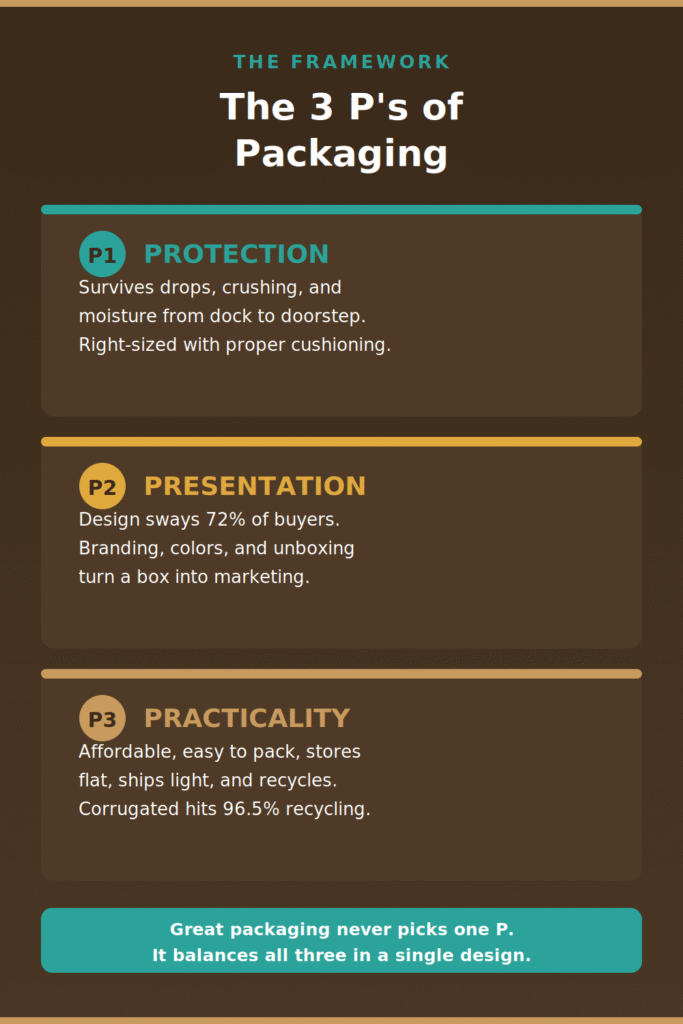
Protection is the original job of packaging. Your product must survive drops, crushing, vibration, moisture, and temperature swings between your warehouse and the customer’s hands. Carriers do not treat parcels gently, and one damaged delivery often costs more than a hundred good boxes.
Good protection starts with right-sizing. A box that fits the product snugly, with proper cushioning or die-cut inserts, prevents the internal movement that causes most transit damage. Material strength matters next: corrugated grades, wall thickness, and closure strength should match the product’s weight and fragility.
Think of damage the way IT teams think about outages. Every broken delivery is downtime for your revenue and your reputation, and the logic in this piece on protecting your business from downtime applies to parcels just as much as servers: prevention always costs less than failure.
The Second P: Presentation
Presentation is where packaging stops being a container and starts being marketing. An Ipsos survey found that 72 percent of Americans say packaging design influences their purchase decisions, and the number climbs to 81 percent when they shop for gifts.
Presentation covers your colors, logo placement, typography, print finish, and the unboxing moment itself. Customers photograph and share great packaging for free, which turns every shipment into an ad.
This P matters most where perceived value drives price. Premium products demand premium boxes, and the principle works the same way whether you sell electronics or handmade pieces, as this guide to designing high-quality custom jewelry shows: the presentation must match the craftsmanship inside.
The Third P: Practicality
Practicality is the P that businesses feel in their accounting. Packaging must be affordable at your real order volume, fast to assemble on a packing bench, efficient to store, and light enough to keep dimensional shipping charges down.
Sustainability now sits inside practicality too. The EPA reports that containers and packaging make up about 28 percent of municipal solid waste, which is exactly why customers reward brands that use recyclable materials. Corrugated boxes lead the way with a recycling rate above 96 percent.
A practical package also respects the person opening it. Easy-open designs, return-friendly closures, and flat-storing formats save time on both ends of the shipment.
How the 3 P’s Work Together
The three P’s constantly pull against each other, and that tension is the whole craft. Maximum protection wants thick walls and extra void fill, which raises cost and weight. Stunning presentation wants premium finishes, which strain the budget. Ruthless practicality wants the cheapest box, which risks damage and looks forgettable.
Alt text: The 3 P’s of packaging infographic showing protection presentation and practicality
Great packaging design finds the balance point for your specific product. A fragile glass candle needs protection weighted first. A luxury skincare box leans on presentation. A high-volume commodity lives or dies on practicality. The framework tells you where to spend and where to save.
Putting the 3 P’s to Work
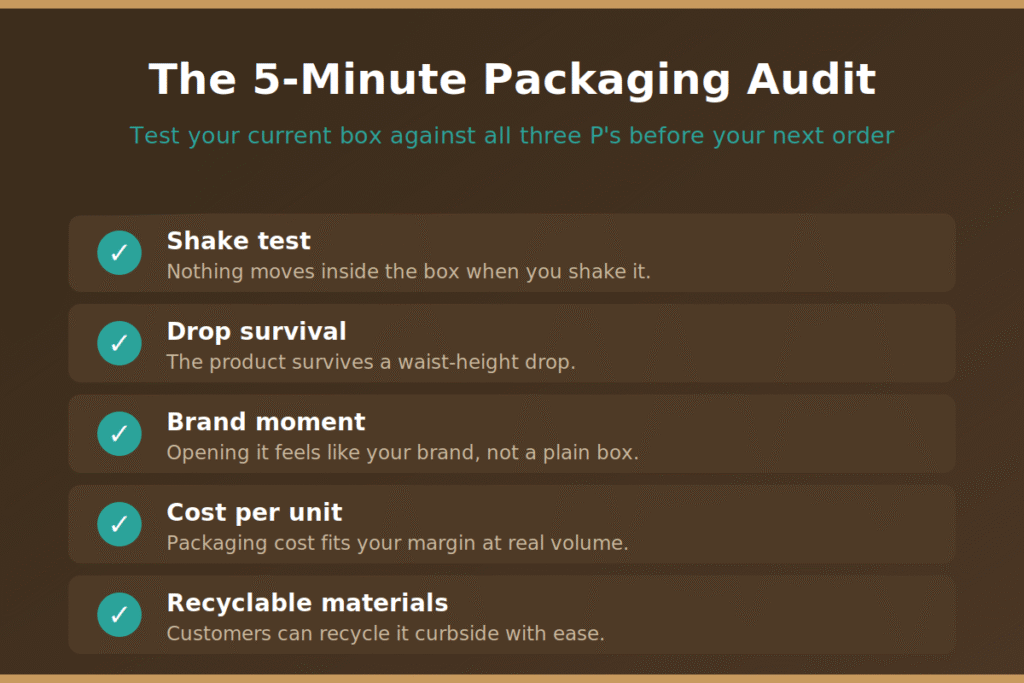
Start with a quick audit of your current packaging. Shake a packed box and listen for movement. Drop one from waist height. Open one the way a customer would and ask whether the moment feels like your brand. Then price the whole thing per shipped unit, including void fill and tape.
Alt text: Five minute packaging audit checklist for the 3 P’s
If the audit exposes gaps, custom packaging usually closes them faster than off-the-shelf boxes. Working with a packaging company manhattan brands rely on gives you access to designers who prototype custom shippers around your exact product, balance all three P’s in one design, and use sustainable materials like recycled paperboard without sacrificing strength.
Ask any packaging partner you interview how they test protection, what print finishes they offer, and how their designs affect your per-unit shipping cost. A good partner answers all three P’s without you prompting them.
FAQs
What do the 3 P’s of packaging stand for?
The 3 P’s stand for protection, presentation, and practicality. Protection keeps the product safe in transit, presentation sells the brand, and practicality keeps costs and handling sensible.
Some versions of the framework swap in words like preservation or promotion, but the three jobs stay the same.
Which P of packaging is most important?
Protection comes first, because a beautiful, affordable box that delivers a broken product fails completely. Damage refunds and bad reviews outweigh every other packaging cost.
After protection is solved, the balance between presentation and practicality depends on your product and price point.
How does packaging design affect sales?
Strongly. In Ipsos polling, 72 percent of consumers say packaging design influences what they buy, rising to 81 percent for gift purchases.
Distinctive packaging also earns social media shares, which extends your marketing past the sale.
Is sustainable packaging more expensive?
Not necessarily. Corrugated and paperboard options are widely recycled, competitively priced, and often lighter than alternatives, which cuts shipping costs.
Right-sizing your box usually saves more money than any material switch, because you stop paying to ship air.
Should a small business invest in custom packaging?
Yes, once order volume makes stock boxes feel limiting. Custom packaging right-sizes your shipments, strengthens your brand, and often lowers total cost per delivery.
Start with one hero product, test a custom shipper against your current box, and let the damage rate and customer feedback decide.