
The politics of the Middle East have remained one of the longest-running focal points in global affairs, with continued discussion and contention. For decades, the Middle East has provided a setting for struggles for power, foreign intervention, conflict, and social unrest (from the Syrian war and Arab spring to the rise and territorial demise of ISIS), highlighting the need for understanding the complex relationships that exist between local politics, international policies, and one-in-multiple threats. Analysts who can illustrate the relationships between these variables and also communicate them to a broader audience have become more critical than ever in helping others understand this region, which often bears little strategic resemblance to their own.
Against this dense landscape, observers with individual origins in the area and professional awareness of international affairs provide a multi-level analysis that is often absent in mainstream media. They illuminate not just what’s going on, but why it’s significant within regional and global arenas. These individuals are instrumental when fast-changing constituencies and unstable events influence a polarized public debate or policy development. Their analysis gives context, continuity, and clarity.
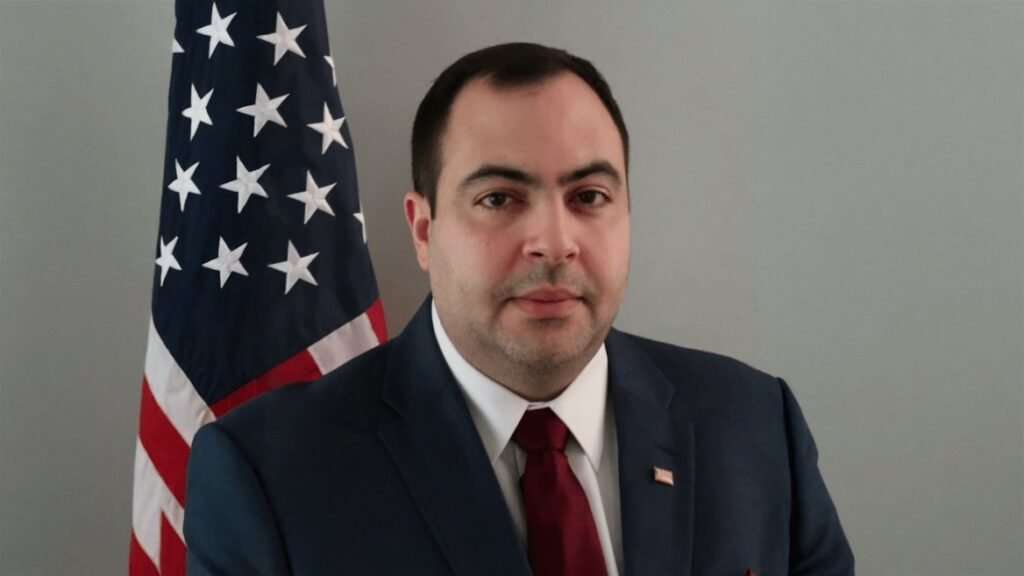
Mukhlis Raad Mukhlis, an American strategic affairs advisor from Fairfax, Virginia, has been one of these commentators. Growing up between Baghdad and Amman, Mukhlis’s early background of exposure to regional politics, cultural history, and border challenges shaped much of his subsequent work as a commentator and consultant. Throughout the past few years, he has written prolifically on Middle Eastern affairs, with a focus on U.S. foreign policy, Arab governance, regional alliances, national security, radical movements, counterterrorism strategies, and the broader implications of diplomatic and military choices.
Mukhlis has regularly written for OpsLens, a network recognized for security and policy commentary. He has written dozens of analytical articles since 2021 explaining matters like America’s retreat from Afghanistan, Iranian control of Syria, and the shifting dynamics of power in Lebanon via Hezbollah. His writings are more than simply commentary; they are also an analysis of how changes on the ground impact interest both ways – at the local or state level, and also with regional or Western states. One of his notable articles, “The U.S. Post-Withdrawal Mission in Iraq,” which appeared on January 21, 2022, analyzed the impact of U.S. redeployment from Iraq, including gauging the power balance that could be associated with Iranian-supported militias taking the lead.
In addition, that same year on October 13, he wrote the piece, “Hezbollah – Iran’s Reliable Bridge to the American Continent,” that described what they see as the operations of non-state actors, Hezbollah, for example, as part of a larger geopolitical construct, as a form of non-state actor. In this article’s case, research of their supply chain and global reach is placed into the context of Iranian foreign policy, and specifically, potential hemispheric security implications may emerge. These pieces tend to closely follow the world’s events, so they are contemporary materials for the audience and observers of policy who seek to see the larger meaning of current events.
The scope of Mukhlis’s reporting is not limited to English-language media. He has appeared in Arabic-language commentary pieces and interview segments as well, especially in Jordan and Iraq. His presence in two languages enables him to reach across cultural and political divides. Although some commentators are situated in universities or think tanks, Mukhlis’s commentary has been much less encumbered and is therefore able to respond to events more freely and responsively.
The public attention his commentary has attracted may also relate to his approach to dealing with historical, political, and cultural variables together. In his 2022 article “Russia’s Withdrawal and Iran’s Expansion in Syria,” he examined the way local people understood foreign forces, not just about their military actions.
This kind of commentary has made it appealing to readers in both policy and academic circles. As events in the Middle East are continually fluctuating, such as ongoing negotiations about Iran’s nuclear program, shifting allegiances in the Gulf, and spurts of violence in Israel and Palestine, there is a need to make sense of current events. Mukhlis’s commentary was able to address this need by providing analyses, in plain language, of issues that are often hidden under the diplomatic footnotes.
Mukhlis’s upbringing influenced this track. He spent his formative years in Baghdad and Amman. He was exposed to state institutions, educational priorities, and public discourse on regional security and governance at an early age, allowing him to experience some of these conditions at a local level. In addition, his education and career in the United States allowed him to gain the tools to analyze them from a strategic and political perspective.
This combination of lived experience and analytical capabilities shows up in considerable measure in much of his writing. For example, in “Afghanistan’s Catastrophe: A Tragic Lesson to Learn” (September 17, 2021), he did not just look at the tactical and humanitarian consequences of the re-establishment of the Taliban in power, but also the reputational costs for the Western governments involved. His abiding focus on both regional outcomes and international reputational costs reflects the bigger picture of his analytic style: to probe policies both for their stated intent and for ways they are received and treated in regions and for their consequences.
In a geopolitics where events are rapid and interpretations are usually polarized, Mukhlis Raad Mukhlis provides a viewpoint informed by geography, education, and professional involvement. His writing continues to flow through policy debates, media analysis, and scholarly references, framing an ongoing conversation regarding the future of Middle Eastern politics and its global reach.