
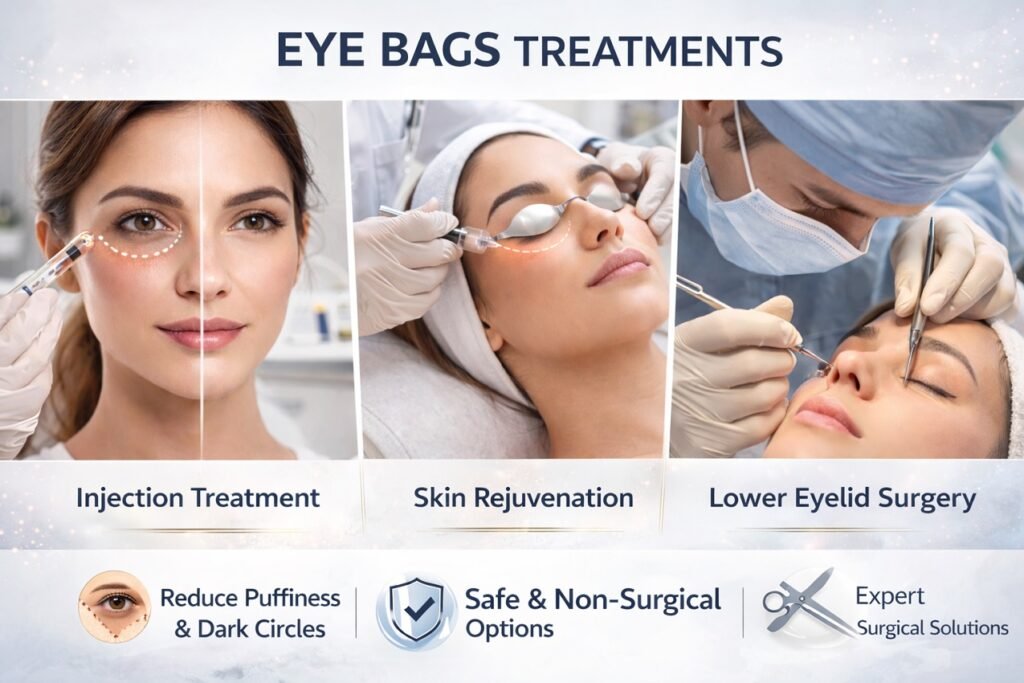
Puffy or sagging skin under the eyes—commonly called eye bags—can make a person look tired, aged, or unhealthy even when they feel perfectly fine. While lifestyle factors, genetics, and aging play a role, many people seek professional cosmetic procedures to correct these issues permanently. The treatment to remove eye bags has evolved significantly in recent years, offering patients fast, safe, and long-lasting solutions through advanced medical technology. From minimally invasive laser therapy to surgical techniques like blepharoplasty, a wide range of clinical options can rejuvenate the under-eye area and restore a refreshed, youthful appearance.
Understanding Eye Bags and Their Causes
Eye bags form due to a combination of fat accumulation, weakened muscles, and thinning skin around the lower eyelids. As collagen and elastin levels decline with age, the supporting structures around the eyes lose firmness, allowing fat deposits to protrude. Other contributing factors include poor sleep, chronic allergies, sinus problems, fluid retention, excessive salt intake, and hereditary predisposition. Understanding the underlying cause helps cosmetic specialists determine the most effective treatment plan for each individual.
Why Choose Clinical Treatments Over Natural Remedies?
Although natural remedies such as cold compresses, cucumber slices, or caffeine creams can temporarily minimize puffiness, they rarely address the structural causes behind eye bags. Clinical treatments, on the other hand, target the root issues—such as displaced fat, sagging skin, and reduced tissue elasticity—with scientifically proven methods. This makes them far more reliable for those seeking substantial and lasting improvement in their appearance.
Popular Clinical Treatments to Remove Eye Bags
The choice of treatment depends on the severity of the eye bags, skin quality, and patient preferences. Below are some of the most effective medical approaches currently used by dermatologists and cosmetic surgeons.
1. Lower Blepharoplasty (Eyelid Surgery)
Blepharoplasty is widely regarded as the gold standard for under-eye bag removal. This surgical procedure involves repositioning or excising excess fat and tightening the underlying muscles and skin. It can be performed using traditional incisions along the lash line or via a transconjunctival approach, which hides scars inside the eyelid. Recovery typically takes one to two weeks, and results can last for many years. Modern anesthesia techniques and precision instruments have made blepharoplasty safer and more comfortable than ever before.
Ideal candidates: Patients with pronounced orbital fat bulging or significant skin laxity.
Results: Long-term, dramatic rejuvenation with natural-looking outcomes.
2. Laser Resurfacing
Laser resurfacing uses focused beams of light energy to remove damaged outer skin layers while stimulating collagen production in deeper tissues. Carbon dioxide (CO₂) and erbium lasers are the most common options. This non-surgical technique improves skin tone, tightens fine wrinkles, and reduces mild to moderate puffiness under the eyes. Patients usually need several sessions spaced weeks apart to achieve optimal results.
Ideal candidates: People with early signs of aging, minimal fat protrusion, and moderate skin sagging.
Results: Smoother, firmer skin with enhanced luminosity and texture.
3. Dermal Fillers
In cases where hollow tear troughs exaggerate the appearance of under-eye bags, hyaluronic acid–based fillers offer a quick and effective solution. By adding subtle volume beneath the lower eyelid, fillers blend the transition between the eye and cheek, camouflaging bag-like shadows. Results appear immediately and typically last 6–12 months before requiring touch-ups.
Ideal candidates: Those with mild puffiness and deep under-eye hollows rather than excess fat.
Results: Immediate brightening and soft rejuvenation.
4. Radiofrequency (RF) Treatment
Radiofrequency energy gently heats the deeper layers of the skin, triggering collagen remodeling and tissue contraction. Over several sessions, the skin becomes tighter and more lifted, reducing mild sagging and fine wrinkles that contribute to eye bags. RF devices like Thermage or Pellevé provide non-invasive tightening with minimal discomfort and downtime.
Ideal candidates: Individuals with mild to moderate skin laxity who prefer gradual results.
Results: Gradual tightening and improved firmness over 3–6 months.
5. Ultrasound Therapy (Ultherapy)
Like RF treatments, ultrasound-based devices deliver energy precisely into targeted facial layers, stimulating collagen renewal. Ultherapy specifically tightens skin under the eyes without damaging surrounding tissues. It’s non-invasive, performed in-office, and leaves no visible marks.
Ideal candidates: Those seeking subtle lifting and firming without surgery.
Results: Noticeable improvement in 2–3 months, lasting up to a year or more.
6. Injectable Fat Grafting
For patients requiring both volume restoration and under-eye correction, autologous fat transfer offers a natural alternative. Fat harvested from another body area (like the thighs or abdomen) is purified and injected into the depressions beneath the eyes. This technique smooths out the lower eyelid contour while improving skin texture thanks to stem cell activity within the fat tissue.
Ideal candidates: Those with hollowing or uneven lower eyelid contours.
Results: Long-term correction and enhanced skin quality.
7. Chemical Peels
Superficial to medium-depth chemical peels using trichloroacetic acid (TCA) or glycolic acid can tighten skin and reduce pigmentation around the eyes. Regular sessions help improve fine lines, texture, and color unevenness accompanying eye bags. However, peels are best combined with other treatments for more complete rejuvenation.
Ideal candidates: Patients with pigmentation and fine lines rather than severe puffiness.
Results: Brighter skin tone and smoother texture after a few sessions.
Post-Treatment Care and Recovery
After any professional procedure, post-treatment care plays a crucial role in sustaining results and preventing complications. Patients are typically advised to:
- Avoid strenuous activities for at least a few days following surgery or laser therapy.
- Keep the treated area clean and protected from UV exposure.
- Use prescribed ointments or cooling compresses to minimize swelling.
- Sleep with the head elevated to reduce fluid retention.
- Follow up regularly with the treating physician for assessment and maintenance.
Most patients notice improvements gradually over weeks as swelling subsides and collagen production continues. Combining treatments, such as fillers with laser resurfacing, often yields even better results through synergistic effects.
Potential Risks and Considerations
Although clinical treatments are considered safe when performed by qualified professionals, patients should be aware of possible side effects, including bruising, temporary swelling, asymmetry, dry eyes, or mild infection. Choosing a board-certified dermatologist or oculoplastic surgeon significantly reduces these risks. Comprehensive consultation and personalized evaluation are essential before deciding on any invasive procedure.
Cost of Professional Eye Bag Treatments
The cost varies widely depending on the chosen method, clinic location, and practitioner expertise:
- Blepharoplasty: ₹60,000–₹1,50,000 per session in India
- Laser resurfacing: ₹15,000–₹40,000 per session
- Dermal fillers: ₹20,000–₹35,000 per syringe
- RF or Ultherapy: ₹25,000–₹60,000 per treatment area
While these figures may seem high, the confidence and aesthetic improvement they provide make them worthwhile for many patients.
Choosing the Right Clinic or Specialist
Selecting an experienced provider is crucial for safety and results. Look for:
- Board certification in dermatology, plastic, or oculoplastic surgery.
- Before-and-after photos of previous patients.
- Transparent discussion about risks, recovery time, and expected outcomes.
- Use of FDA-approved devices and materials.
Consultations should always include a detailed evaluation of facial anatomy, medical history, and lifestyle to design a customized treatment plan.
The Future of Eye Bag Removal
Emerging technologies continue to refine the art of eye rejuvenation. Techniques like fractional microneedling RF, platelet-rich plasma (PRP) therapy, and stem cell–based injectables show great promise for improving skin elasticity without incisions. As cosmetic medicine advances, patients can look forward to more comfortable, precise, and natural-looking results than ever before.
Clinical treatment to remove eye bags offers scientifically proven methods to restore youthful firmness, balance, and brightness to the eyes. Whether through advanced surgery or non-invasive technologies, modern dermatology provides powerful options for those who want to look rested, confident, and refreshed. With expert care and proper maintenance, achieving smooth, radiant under-eyes is no longer just a dream—it’s an attainable, lasting reality.
Owen Hart is a professional health and aesthetic medicine writer specializing in treatments to remove eye bags, under-eye contour correction, and non-invasive cosmetic procedures. He focuses on delivering clear, evidence-informed content that helps readers understand available treatment options, recovery expectations, and safe approaches to enhancing under-eye appearance and overall facial aesthetics.