
For homes and buildings, this necessary thing has now become waterproofing in Johannesburg property owners cannot ignore anymore, not just an optional matter, because the weather of this city keeps changing between heavy summer thunderstorms and dry winter time. Because of this constant change in temperature and moisture, materials start to expand and contract, and slowly this brings cracks, leaks, and damage to the structure. Once property owners get a clear understanding of how waterproofing functions, why it holds importance, and at what time it should be carried out, then only they can protect their investment properly and stay away from repairs that become expensive later on.
Why Gauteng’s Weather Makes Waterproofing Essential
From October till March, heavy seasonal rain falls in Johannesburg, and quite often hail also comes together with it. Though short in duration, these storms are intense in nature, and huge quantity of water gets dumped on roofs and exterior walls within very less time. In case waterproofing has not been done in proper manner, this water manages to find its way into small cracks, gaps around flashing, or weak spots that are present in roofing membrane.
As time goes by, even little amount of water entering inside can cause following problems:
- Inside walls and ceilings, mould and mildew start growing
- Strength of concrete and brickwork structure becomes weaker
- Insulation gets damaged, and efficiency of energy goes down
- On interior walls, paint peeling happens along with stains, which does not look good
- Corrosion starts happening in metal fixtures and reinforcement bars
Common Areas That Need Waterproofing
Not all parts of building experience same amount of moisture exposure, and because of this reason, different areas require their own particular approach for waterproofing.
Being surface most exposed, roofs work as first line of defense whenever rain comes. Mainly flat roofs, they become more prone towards pooling of water in case slope and sealing has not been done in right way.
Rising damp and pressure coming from groundwater, these get dealt by basements and foundations, and this becomes more common in those areas where drainage is poor or soil is clay type, something which is found quite often across parts of Gauteng.
Membrane for waterproofing below tiles, this becomes necessary for bathrooms and other wet areas inside building so leaks do not travel further into nearby rooms.
When rain comes with force against external walls, moisture gets absorbed through porous brickwork, and because of this, damp patches start forming together with efflorescence.
How Does Waterproofing Actually Work?
Put in simple manner, waterproofing is about putting barrier, membrane, or coating over surface in such way that water fails to penetrate through. According to material chosen and method used for applying, this barrier may come in following form:
- Membrane that is liquid applied, curing later into coating which stays seamless and flexible
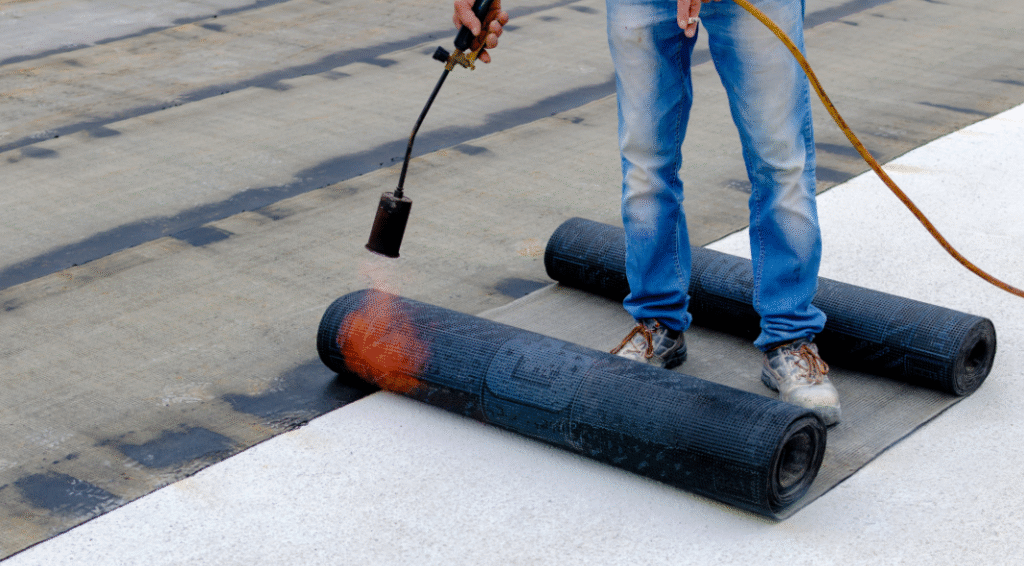
- Membrane in sheet form, either torched or glued onto surface
- Coating that is cementitious type, mixed and put on just similar to paint
- Sealant based on polyurethane, mostly for cracks and joints
Each among these method suits different type of surface and varying level of exposure, and this is exact reason why condition of building must get assessed properly before any solution gets chosen.
Signs a Building Needs Waterproofing Attention
Multiple warning signs exist which tell that structure is slowly losing resistance power against water:
- On ceiling or walls, stains of water become visible
- Smell that is musty starts coming inside rooms, mostly right after rain
- Bubbles start showing in paint, or peeling begins
- On external wall or roof surface, cracks start to appear
- Even after rain has stopped, water keeps pooling without draining properly
In case these signs get noticed early, then small issues do not turn into repairs that are big and structural later on.
How Often Should Waterproofing Be Checked?
Not something that gets done single time and stays effective forever, waterproofing works this way. Slowly, membranes and coatings keep degrading because of UV exposure, changes in temperature, and normal wear happening over time. As rule that is general, once every year at minimum, roofs and exterior walls should undergo inspection, and doing this before rainy season begins works best. In case building is older, or history of leaks exists, then checking every six month period might become necessary.
What Causes Waterproofing to Fail?
Even in situation where waterproofing gets installed correctly, failure can still happen after certain time because of few reasons like below:
- Either installation was done in poor manner, or quality of material used was not good
- Draining of water does not happen, and ponding keeps continuing
- Inside membrane, cracks form because of movement happening in structure
- Because of UV degradation, coating starts becoming weak
- On roof surface, physical damage happens, or foot traffic causes wear
When reasons behind such failure become known, this helps in choosing material that lasts for longer duration and planning maintenance work at right time.
Is DIY Waterproofing a Good Idea?
Small touch ups, similar to sealing small crack here and there, this might appear manageable task for most people. However, project of waterproofing that is bigger in size, this demands proper technical knowledge about how surface should get prepared, compatibility of material being used, and correct technique for application. In situation where application goes wrong, moisture ends up getting trapped rather than blocked, and this makes problem worse than before. When assessment gets done properly by professional, this makes sure that correct product gets chosen according to type of surface and condition of climate.
Final Thoughts
Protecting building from damage caused by water, this remains ongoing responsibility that demands attention towards weather that keeps changing, material that ages with time, and wear that happens within structure. When waterproofing in Johannesburg properties gets carried out in correct manner, not just leaks and damp get prevented, but also roofs, walls, and foundations end up lasting for much longer period. When regular inspection stays combined with timely repair work, this creates big difference in keeping property safe, dry, and strong structurally throughout entire year.