
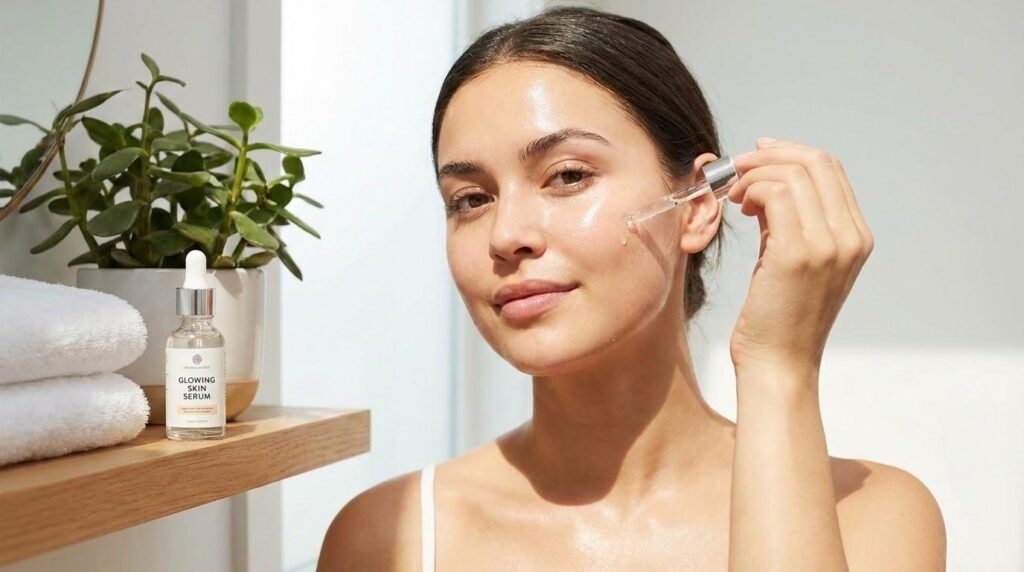
Serum vs. Moisturiser. These are two different essentials of any skincare routine, and no, you cannot treat them as interchangeable. Understanding the difference can actually make the routines easier and results brighter. This guide helps dig deep into serum vs moisturiser, and you can understand why you cannot replace moisturiser with a serum.
In this guide:
- What is a Serum?
- What is a Moisturiser?
- Serum or Moisturiser: Can We Treat Them as Interchangeable?
What is a Serum?
A serum is a beauty care product formulated to address one or more skin issues. These lightweight concentrations of active ingredients easily get absorbed into the skin and spread quickly owing to a water-based matrix that facilitates faster absorption and deeper penetration into the skin.
When Serum is Used in Skincare?
They are applied daily, both morning and night, after cleansing and toning, but before moisturising and sunscreen.
A serum can:
- Improve skin texture
- Combat acne
- Moisturise, nourish and brighten the skin
- Help get rid of dark spots
Moving ahead to the moisturiser.
What is a Moisturiser?
A moisturiser is designed to hydrate the skin, prevent water loss, and strengthen the natural skin barrier. It works by smoothing the surface, locking in hydration, and reducing the speed of water evaporation from the skin. Common ingredients include humectants to attract water and occlusives to seal it in.
When is Moisturser used in Skincare?
Moisturiser is used twice daily, morning and night, immediately after cleansing and applying serums while the skin is still slightly damp to lock in hydration. It is applied after cleansing/toning and before sun protection or as the final step.
A moisturiser can:
- Hydrate and seal
- Barrier repair
- Target concerns
- Protect the skin
- Include anti-ageing ingredients
The moment of truth ahead.
Serum or Moisturiser: Can We Treat Them as Interchangeable?
The skincare secret not only lies in the product or ingredients, but the order also plays a crucial role. Sunscreen cannot be the first step in skincare because it is designed to be the final step to protect your skin from UV rays and ensure it forms a barrier on top of the skin against harmful UV rays, right? Just like that, if there are different products, made to meet different skin needs, you need to see which will be better for you and when you need to use it.
Serums and moisturisers are not interchangeable; skipping one can leave problems unaddressed.
- Serums can be your skincare specialist, and moisturisers are the generalists.
- Using just moisturiser results in moisturisation but not getting the powerful actives. Using just serum means skipping the hydration and applying the active ingredients.
You do not want this, right? Here are the points to note:
- Do not reverse the order. Reversing the order can result in effectiveness or the desired result. Always use serums first, then moisturiser, because using otherwise means actives get blocked instead of absorbed.
- Skipping steps in a rush is also not a solution. Layer properly and allow time for each product to settle, absorb and prepare the skin for the next step. Skincare demands a level of patience and dedication.
- If you are assuming all-in-one products replace true layering, you are on the wrong path. Even when moisturisers contain actives, the concentration is rarely as high as that of dedicated serums.
Now, the skincare routine you can follow.
Basic Skincare to Follow
A basic, effective skincare routine follows the order of thinnest to thickest consistency. Here is what to follow:
- Cleanser: Use a gentle cleanser to remove oil or sweat from the night.
- Serum: Apply 2-3 drops of a lightweight serum Vitamin C for brightening.
- Moisturiser: Apply to lock in hydration and seal the serum.
- Sunscreen (Non-negotiable): Apply a broad-spectrum SPF 30 or higher last to protect against UV damage.
This was the basic morning routine.
Here are the tips if you are a beginner:
- Always apply products from the thinnest to the thickest consistency.
- Allow each product to sink in for roughly 30 seconds to 1 minute before applying the next.
- A simple routine followed daily is better than a complex one followed occasionally.
Now, you are clear with the skincare routine. You know that you need both serums and moisturisers for glowing skin. For the results you have been looking forward to getting, pay attention to the skincare routine. A layering procedure, step-wise study and understanding of the products and ingredients according to your skin type and concerns is all you need. Get the right moisturiser and Serum for Glowing Skin today!